How a New Driveway Adds Value to Your Easton, MA Home
· By RG Sealcoating
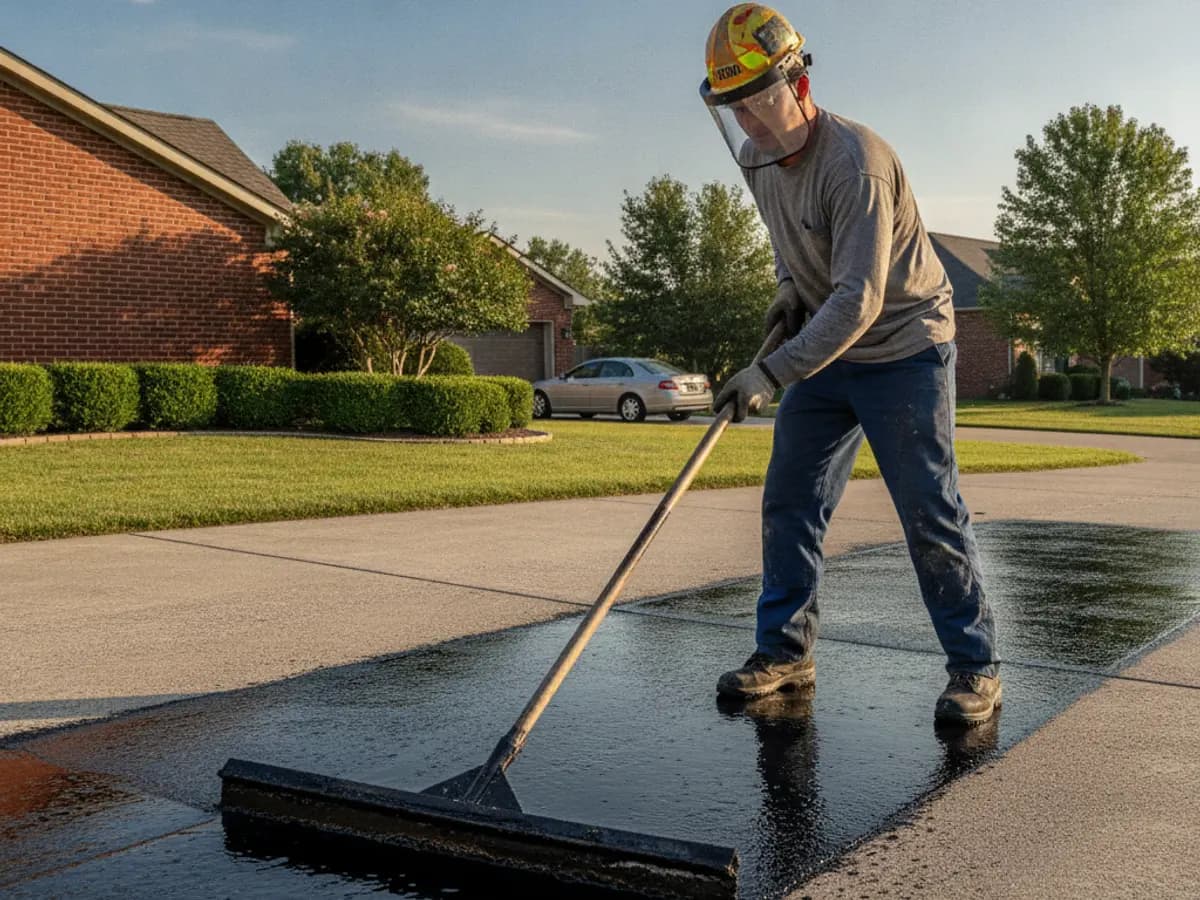
When people talk about home value in Easton, they usually jump straight to kitchens and bathrooms. The driveway rarely makes the list, yet it is one of the very first things a buyer sees when they pull up to a house off Route 138 or turn onto a quiet street near North Easton village. A cracked, faded, weed-filled driveway tells a story before anyone reaches the front door, and it is not the story you want your home to tell.
Easton is a town where that first impression matters more than most. You have historic homes near Stonehill College and the old Ames-era streets sitting next to newer builds off Route 106 and Belmont Street. In both cases, the driveway frames the property. A clean, even surface signals that the home has been cared for, while a broken one makes a buyer wonder what else has been let go.
The good news is that a driveway is one of the more affordable outdoor projects you can do, and it pays you back in curb appeal, buyer confidence, and years of protection against New England weather. Whether your driveway needs a fresh pave or an aged surface needs restoring, here is how that work translates into value for your Easton home.
Curb appeal starts at the street, not the front door
Curb appeal is the value a house shows before anyone walks inside, and the driveway takes up a huge share of what you see from the road. In Easton neighborhoods where lots are generous and homes sit back off the street, that stretch of asphalt is often the largest single surface in the front yard. When it is dark, smooth, and clean-edged, it makes the whole property look maintained. When it is gray and crumbling, it drags everything else down with it.
This matters whether or not you plan to sell soon. Neighbors notice, and so do you every time you come home. A driveway that has been paved or restored and sealed to a rich black gives the front of the house a finished, cared-for look that photographs well and holds up in person during a showing.
For homes near the village or on the older tree-lined streets, a restored driveway also keeps the property in character. It looks maintained and appropriate for a historic home instead of neglected, which is exactly the impression you want to leave with a buyer or an appraiser.
How a driveway affects home value and ROI
A driveway rarely adds a dollar-for-dollar figure to an appraisal the way a finished basement might, but it works on buyers in a quieter, powerful way. Real estate agents will tell you that exterior condition sets the tone for the entire showing. A buyer who arrives to a pristine driveway walks in expecting the rest of the house to match, and that goodwill carries through every room.
The reverse is just as true. A damaged driveway becomes a bargaining chip. Buyers mentally subtract the cost of repaving, often estimating high, and use it to justify a lower offer or a repair credit. Fixing or restoring the driveway before you list removes that objection entirely and keeps the negotiation focused on the home itself.
On cost, paving and restoration are among the better returns in outdoor home improvement because the work is visible, immediate, and something every buyer understands. Pricing depends on the size of the driveway, its current condition, and the scope of the work, so the honest answer is a range rather than a fixed number. The best way to know what your driveway needs and what it will cost is a free on-site estimate.
Restoring an aged Easton driveway instead of tearing it out
A lot of Easton homeowners assume a tired driveway means a full tear-out and repave, and that assumption often costs them money they never needed to spend. Around North Easton village and the older neighborhoods near Stonehill, plenty of driveways look far worse than they are. The surface has gone gray and dry, cracks have opened up, and the edges have crumbled, but the base underneath is still solid.
When the base holds, that driveway is a restoration job, not a replacement. The work is straightforward: a deep clean to strip off years of buildup, routing and filling the cracks, patching the worn and broken spots, and sealing the whole surface back to a deep, even black. The result looks close to new for a fraction of the cost of ripping everything out.
This is often the smartest value move for an older Easton home. You get the fresh, maintained look that lifts curb appeal and buyer confidence without the expense and disruption of a complete rebuild. Full replacement should be a last resort reserved for driveways where the base has actually failed, not the automatic first quote.
New builds off Route 138 need protection early
Easton is a real mix of old and new, and the newer builds off Route 138 and along Route 106 face a different situation. Their asphalt is young, but young does not mean invincible. Fresh asphalt is at its most vulnerable in its first few years, when the binders that keep it flexible are still curing and the surface has never seen a protective coat.
The New England freeze-thaw cycle is hard on unprotected asphalt. Water works into tiny surface pores, freezes, expands, and pries the pavement apart from the inside. Add summer sun that dries the surface out and vehicle fluids that eat at the binder, and an untreated new driveway can start showing its age far sooner than it should.
An early protective seal is the cheapest insurance a new-build homeowner can buy. It keeps water and UV out, preserves that new-driveway look, and pushes the first real repair years down the road. Protecting a young driveway now is what keeps it from becoming a restoration project later, and it keeps your home value working for you instead of quietly draining away.
Protecting the investment year after year
Whether you paved a new driveway or restored an old one, the value only holds if you protect it. Asphalt is a maintenance surface, not a set-it-and-forget-it one. The single most important habit is a regular seal, which most contractors recommend on a cycle of every two to three years depending on traffic, sun exposure, and how the surface is wearing.
Sealing does the heavy lifting: it locks out water before it can freeze and crack the surface, blocks the UV that dries asphalt out, and shields against the oil and gas drips that break down the binder. It also keeps the driveway looking dark and new, which is the visible payoff you and any future buyer will appreciate.
Just as important is catching small problems early. A crack that gets filled this season is a minor fix, while the same crack ignored becomes a pothole and a much bigger bill next year. Staying ahead of cracks and re-sealing on schedule is how an Easton driveway keeps its restored or new look and delays a full repave for as long as possible.
Working with a local, owner-operated crew
A driveway is only as good as the crew that does it, and prep is where the difference shows. Cutting corners on cleaning, crack filling, or patching means the fresh look fades fast and the cracks come right back. Careful prep before any seal or pave is what makes the work last, and that is where an owner-operated crew that stands behind its work earns its keep.
As a local crew, we know Easton driveways because we work on them: the older village properties that need restoration, the newer builds off Route 138 that need early protection, and everything in between. When you call, you are dealing with the person who actually looks at your driveway and does the work, not a rotating subcontractor who will never see the property again.
If you are wondering whether your driveway needs a fresh pave, a restoration, or just a protective seal, the honest answer starts with looking at it. We will tell you straight which one yours needs and never quote a tear-out on a driveway a good restoration could bring back. Reach out for a free estimate and we will help you turn that driveway into value for your Easton home.
Frequently asked questions
- Does a new or restored driveway actually add value to my Easton home?
- It adds value mainly through curb appeal and buyer confidence rather than a fixed appraisal figure. In Easton, the driveway is often the largest surface a buyer sees from the street, so a clean, dark, well-edged one sets a positive tone for the whole showing. A damaged driveway does the opposite and usually turns into a price negotiation, so fixing it before you list removes that objection.
- Do I need to fully repave my old driveway, or can it be restored?
- Many aged driveways around North Easton village and near Stonehill can be restored rather than replaced. If the base underneath is still solid, we clean it, fill the cracks, patch the worn spots, and seal it back to a rich black for a fraction of the cost of a tear-out. Full replacement is only for driveways where the base has actually failed. A free estimate tells you which side of that line yours is on.
- How much does driveway paving in Easton, MA cost?
- Cost depends on the size of the driveway, its current condition, and whether you need a full pave, a restoration, or a protective seal. Because those factors vary so much from home to home, an honest answer is a range rather than a single price. The reliable way to get a real number is a free on-site estimate where we look at your specific driveway.
- My driveway is new. Do I really need to seal it already?
- Young asphalt on newer builds off Route 138 and Route 106 benefits from an early protective seal. Fresh asphalt is most vulnerable in its first few years, and the New England freeze-thaw cycle plus summer UV can start breaking it down before you expect. An early seal is inexpensive insurance that keeps a new driveway looking new and delays the first real repair.
- How do I keep my driveway looking new after the work is done?
- Stay on a regular seal cycle, which most contractors recommend every two to three years depending on traffic and sun exposure, and fill any small cracks as soon as they appear. Sealing locks out water and UV and keeps the surface dark, while catching cracks early stops them from turning into potholes. That routine is what protects the value of the driveway year after year.
Related services
Serving
Ready for an exact price?
Get a free, no-pressure in-home estimate. Real numbers for your home, not a phone guess.