How a New Driveway Adds Value to Your Norwood, MA Home
· By RG Sealcoating
In Norwood, your driveway carries more weight than most homeowners realize. It is the first surface a visitor walks on, the first thing a buyer studies from the curb, and the part of your property that absorbs the hardest hits from New England weather. On the densely built streets near Norwood Depot and the blocks around the downtown Common, driveways sit close together and in full view, so a cracked, gray slab stands out just as sharply as a clean black one.
Norwood is an older town, and a lot of its homes still ride on their original asphalt. You can see it driveway after driveway near the town center and out toward the Route 1 corridor: sun-baked surfaces going pale, edges the plow has chipped, and hairline cracks that widened after a few winters. That kind of wear quietly pulls down how your home looks and feels, and it shows up at the exact moment it matters most.
The good news is that few upgrades pay you back the way driveway work does. Whether your surface needs a full repave or just a fresh sealcoat to bring it back, the money you put into the pavement out front tends to return in curb appeal, in protection, and at resale. Here is how that plays out for a Norwood home.
In tight Norwood neighborhoods, the driveway is on display
Norwood was built dense. The neighborhoods near Norwood Depot and the downtown blocks off Washington Street sit on smaller, closely spaced lots, which means driveways are often narrow, short, and right up against the sidewalk and the house next door. There is nowhere to hide a worn surface. A passerby, a neighbor, or a buyer sees the whole thing from the street in a single glance.
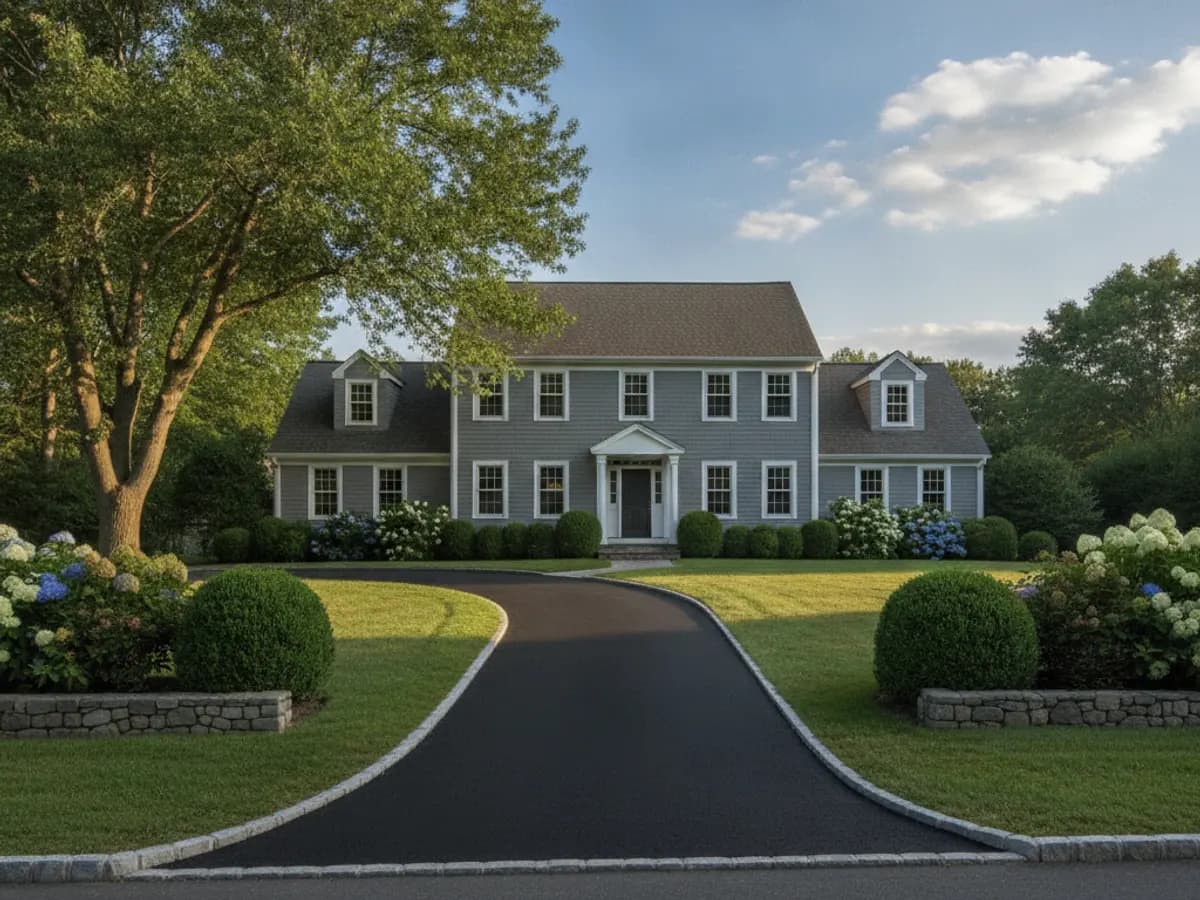
That density cuts both ways. On a tight Norwood lot, a fresh black driveway makes an outsized difference because it is such a large share of what people actually see out front. It frames the walkway, ties the entry and the yard together, and makes the siding and landscaping read sharper by contrast. On a compact property, the driveway is frequently the single biggest surface facing the street.
It also means the work has to be done cleanly. A driveway squeezed between a neighbor and a sidewalk leaves no room for sloppy edges or overspray, which is why local crews that know how to work Norwood tight lots matter. A driveway finished with crisp borders looks intentional, and on a small lot that precision is the difference between tidy and rough.
Curb appeal starts at the curb, literally
Buyers form an opinion before they reach the front door. In Norwood, where the commuter rail and easy Route 1 access keep demand steady, that first impression carries real weight. A smooth, dark driveway signals a home that has been looked after. A cracked, weed-split one signals deferred maintenance, and it makes a buyer wonder what else got skipped.
The effect is not subtle. A clean driveway pulls the whole front of the house together, and on the closely spaced lots near the town center it is often the largest thing a buyer notices first. That single surface sets the tone for how they read the rest of the property before they have stepped inside.
You do not always need a full repave to get that look back. A driveway with a solid base can be cleaned, crack-filled, and sealed to a rich black finish that reads as new. When the asphalt is too far gone, fresh paving delivers the same lift with a longer runway ahead of it. Either way, the payoff lands the moment someone pulls up out front.
What a driveway actually returns at resale
Home improvement returns vary by project, but exterior work that sharpens the first impression consistently ranks among the smartest money a homeowner spends. A driveway sits near the top of that list because it is visible, functional, and something buyers instinctively factor into their offer.
Look at it from the buyer side. If your driveway is failing, a buyer mentally subtracts the cost of replacing it, and they usually overestimate that cost to protect themselves. Handling the driveway before you list removes that deduction and one more reason to negotiate you down. In a steady Norwood market, cleaning up the front of the house can be the nudge that turns a maybe into an offer.
We will not quote you a fake number on return, and no honest contractor should. What we can tell you is that paving and sealcoating cost far less than most buyers assume, and that a surface presented in good shape protects your asking price better than one left to crack. For an exact figure on your driveway, get a free estimate and we will walk you through what it needs and what it does not.
Protecting the investment you already made
A driveway is not a one-time purchase. Asphalt is a living surface that oxidizes in the sun, dries out, and slowly loses the binder that holds it together. Once that top layer turns brittle, water finds every crack. In Norwood winters, that water freezes overnight, expands, and pries the pavement apart from the inside. By the third or fourth season without care, a few thin lines can become potholes that demand real patching.
Sealcoating on a two to three year cycle is what stops that clock. It restores the black, flexible top layer, blocks water, UV, and the road salt and oil drips that eat asphalt, and it costs a fraction of a repave. Skipping it does not save money, it just moves the bill to a bigger, more expensive job down the road.
That is the part homeowners around Norwood miss most often. The value of a driveway is not only in how it looks the day it is finished, it is in how long that finish lasts. Protect the surface early and you can stretch a paving job well past a decade. Ignore it and you cut its life short by years.
The Route 1 corridor and Norwood weather age asphalt fast
Homes near the Route 1 corridor and the busier stretches of Norwood take on extra grit, traffic dust, and heavy road salt runoff through the winter, all of which speed up how quickly a driveway looks tired. Combine that with the full New England cycle, hot humid summers that bake the surface and hard freezes and thaws that hammer it, and you have a climate that ages pavement faster than most homeowners expect.
The edges take the worst of it. Plow blades chip the sides after every Norwood storm, salt draws moisture out of the surface, and freeze-thaw finishes the job by widening any gap it can find. That is why the older driveways near the town center so often crumble at the borders first. Catching that early, with crack filling and a fresh seal, keeps the damage from creeping inward.
The sealing window here is short. It runs roughly from late spring through early fall, when temperatures stay warm enough for a coat to cure properly. Booking early in that window means you get your pick of dates instead of scrambling for a slot in October right before the cold shuts the season down.
Paving versus sealing: matching the fix to the driveway
Not every tired driveway needs to be torn out. The right call depends on the base underneath. If your asphalt is structurally sound and just faded or lightly cracked, the smart, cost-effective move is to clean it, fill the cracks, patch any rough spots, and seal it back to a fresh finish. That brings back the look and the protection without the price of new pavement.
When the base has failed, when you see wide alligator cracking, sunken sections, or potholes that keep returning, paving is the better investment. Coating over a broken base only hides the problem for a season, and it wastes money. A straight contractor will tell you which camp your driveway falls into instead of selling you the pricier option by default.
For a lot of Norwood homes, the answer sits somewhere in between: patch the failed areas, then seal the whole surface. The goal is always to spend where it counts and skip the work your driveway does not need. That honesty is what makes the value hold up over time.
Frequently asked questions
- Does a new driveway really add value to a Norwood home?
- Yes. The driveway is one of the first things a buyer sees, and on the tight, closely spaced lots common in Norwood it makes an outsized first impression. A clean, sound driveway removes an easy reason to negotiate you down and helps protect your asking price. For an exact read on your driveway and what it needs, get a free estimate.
- Should I repave or just sealcoat my Norwood driveway before selling?
- It depends on the base. If the asphalt is structurally solid and mainly faded or lightly cracked, sealcoating restores the look at a fraction of the cost. If the base has failed with wide cracking or potholes, paving is the better investment. We will look at yours and tell you honestly which one makes sense.
- How much does driveway paving typically cost in Norwood, MA?
- Cost depends on size, condition, and how much prep the surface needs, so most Norwood driveways typically fall within a range rather than one flat price. Sealcoating is far cheaper than repaving. The only way to get an accurate number is a free estimate, and we will give you one with no pressure.
- My driveway is narrow and tight against the sidewalk. Can you still do it cleanly?
- Yes. A lot of Norwood driveways sit on small lots, close to the walk and the house next door, so clean edges and no overspray are the whole point. We work tight spaces carefully so the finish lands crisp on your pavement and nowhere else. That precision is what makes a small driveway look sharp instead of rough.
- When is the best time to have driveway work done in Norwood?
- The New England window runs roughly from late spring through early fall, when temperatures stay warm enough for a proper cure. Booking early in that window gives you your choice of dates. Reach out and we can usually get you scheduled within days of good weather.
Related services
Serving
Ready for an exact price?
Get a free, no-pressure in-home estimate. Real numbers for your home, not a phone guess.